
Earthquake Seismic Retrofit Foundation Bolting Contractor
San Francisco Bay Area Seismic Specialist
Foundation Bolting Shear Walls Cripple Walls Structural Engineering
Seismic Earthquake Foundation Retrofit Contractor Located in Castro Valley, Serving the San Francisco Bay Area
General Contractor Serving Your Needs
Why Should I Retrofit My Home?
Call Today For A Free Estimate 510-885-0197
A home that has been retrofitted is able to resist much greater earthquake forces and has a lower risk of being damaged.
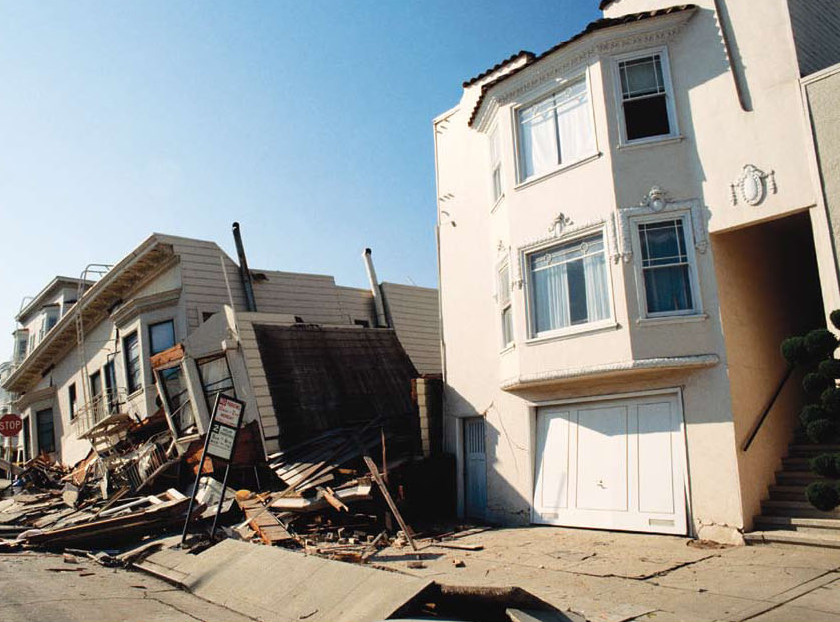
Homes Must Be Able To Have Enough Structural Strenght To Handle A Modest Range Of Earthquakes
New Building Codes Help Address Issues
Through numerous studies of past earthquakes, engineers have now determined critical aspects of home construction that make a substantial difference in the ability of a house and other structures to ride out the massive forces of earthquake movments. Newer building codes have incorporated these new engineering requirements.
Older Building Codes
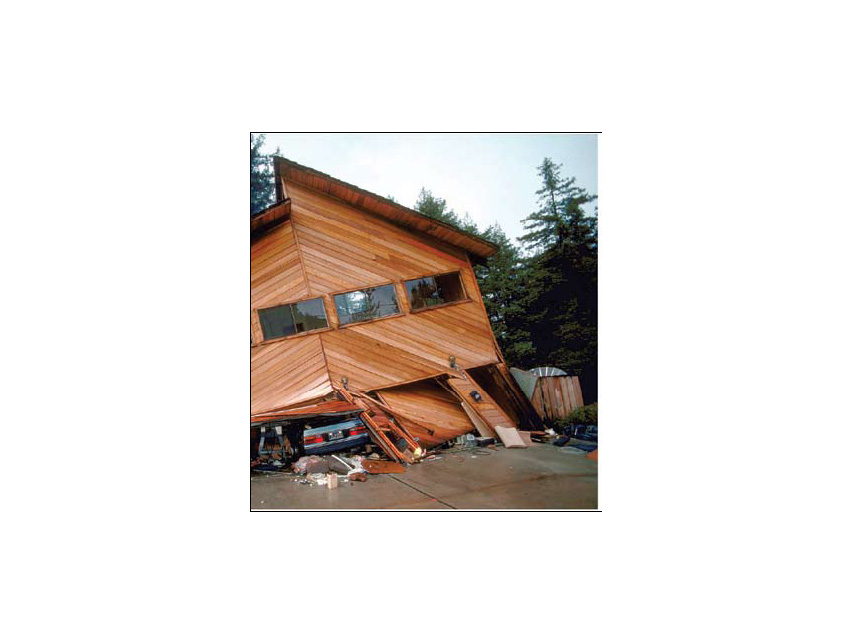
So where does this leave all the homes that were build prior to the new building codes ? For the most part, the homes are at major risk. While it is impractical to tear apart the home and rebuild to today’s standards, there are reasonable measures that have been adopted referred to earthquake retrofitting which to a great job in structurally enhancing a home.
New Less Intrusive Retrofit Methods
Fortunately, there are less intrusive ways to retrofit older homes and improve their structural safety and performance during an earthquake. We provide product solutions that increase the strength and safety of homes. These products are used to connect and secure the structural frame of a house. Most of our retrofit products are manufactured by Simpson.
Reasons To Retrofit
- Your home will have a better chance of surviving the next big earthquake and with less property damage and loss of life.
- Retrofitting your home may lower earthquake insurance premiums and deductibles.
- Strengthening your home can add resale value.
Call Golden Gate Enterprises Now For A Free Estimate
510-885-0197
Earthquake Basics
Before you begin a retrofit project, it’s important that you are familiar with the basic principles of home construction and how earthquakes impact your home.
Lateral and Uplift Forces Are the Focus of Retrofits
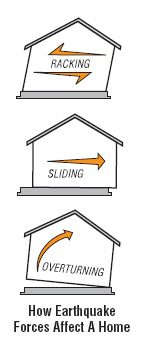
Earthquakes cause two major types of forces which include both lateral and uplift forces. The lateral force, often refered to as shear, is whan can cause significant damage from back and forth movements. Lateral movements are so strong they can cause a house to fall down, as well as slide off its foundation. Uplift forces are just as bad and can cause a structure to turn over or be lifted off its foundation. The use of the continual load path concept provides significant increases in structural strenght, allowing for more reistance against uplift as well as leter shear forces.
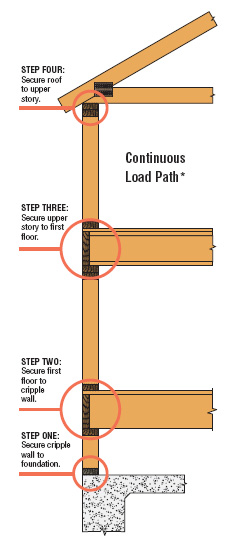
Continous Load Path is An Important Concept
New building codes have seismic calculations that leverage the concept of continuous load path. The simple explanation is that by using an appropriate series of plywood panels, screws, nails, metal connectors, bolts, and steel panels, the structure is tied together in suche a way that the forces are moved from the structure of the house to the foundation. Everything must be tied together properly for a good continous load path to exist.
Do I Need To Retrofit My Home ?
There are certain types of homes that are more likely to need a retrofit than others. A quick analysis of your home can help determine if your home fits that criteria.
1. Are you living in Earthquake Country ?
Yes your are, if you are in the San Francisco Bay Area. An no, someone that lives in San Ramon can’t say..”Hey , I am fine, I don’t live on the Hayward fault “. The fact is that earthquakes 30 miles away can topple homes and buildings.
2. How Long Ago Was You House Built ?
If your house was built with the last 20 years, you likely have updated construction. If you home is older than that, you are at significantly greater risk. On area that has only changed recently is the use of 3″ square washers on foundation mud sill. Many home even less than 20 years old, still have the small round washers that have show to pull through the wood mud sills. These washers can be replace and updated in many cases.
3. Do You Have A Raised Foundation ?
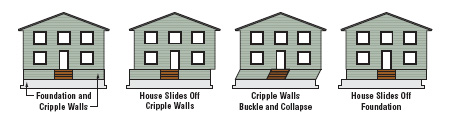
Houses that have a crawl space underneath, have a raised foundation. These types of foundations have “cripple” walls that go from the foundation plate, to support the first floor. These cripple walls have to be properly reinforced and connected in order to have proper continous load path.
4. Living on a hillside ?
Hillside foundations pose additional challenges because to increased height of cripple walls, and downward hillside forces. Each situation is unique, requiring the proper type of earthquake seismic retrofit. Golden Gate Entprises, Inc your San Franciso Bay Area General Contractor can help you with the details including engineering and permits.
5. Is their a room above your garage Have you heard of “soft story” ?
Because garage doors are really just a big whole the wall (less shear), the wall that have these openings are dramatically weakened compared to a solid wall. Special reinforcement is required. Sometime “strong walls” are installed, or a “moment frame” to provide structual stability. Think steel frames around the garage opening..that’s the concept. Soft story failures are all too common and one of biggest risks of older construction. If you have a room above the garage..and its an older house..time to get a retrofit. Rember those pictures of the house falling and burning int the Marina during our last earthquare ? Did you remember that most of them were houses with garages and a room above……

If you live in an older home with a living space above the garage or on a hillside, we will need to consult with our licensed structural engineer for design solutions.
WE PROVIDE FULL ENGINEERING & PERMITS
CALL Golden Gate Enterprises Today
1. Floor Systems Must Be Properly Attached To Perimeter Walls
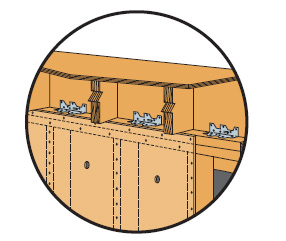
Crawl space walls, cripple walls, have to be connected to the floor system above. This is typicall done by installing the proper connectors to secure the top of the cripple wall, to the “rim joist”, which ties everything to the floor system. Remember the continous load path concept ?
2. Extra tall crawl space walls can cause trouble.
Very tall cripple walls, typicall more than 4ft, require that an engineer specify the details for securing this area. This applies if the house is 3 stories, and has a cripple wall more than 14″. Also, if the home is more than 3 stories.
3. Proper Post And Beam Connections Are Critical
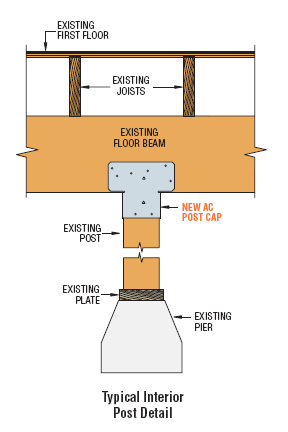
Older constrution almost ignored this connection. There are special connectors that take care in securing the post to beam connection.
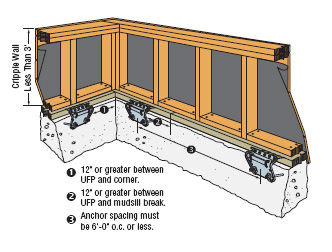
4. Bottom plates “mud sills” must be properly secured to the foundation.
Current building codes requre anchor bolts that are 5/8″ diameter, be placed within 12 inches of the end of each wall, and be spaced no more thatn 6ft for one and two story houses. Washers must be installed under the nut, and on top of the sill plate. Today’s codes require 3″ square washers. Bolts and washers should not be damaged or rusted.
Building codes require that 5/8|-inch diameter anchor bolts should be placed at certain lo
cations to prevent the home from sliding off of the foundation. According to the code, anchor bolts must be located within 12 inches from the end of each plate line and no more than 6 feet on center for one and two-story homes. The bolts should have a bearing plate between the top of the sill plate and the nut.The bolts should be undamaged and rust-free.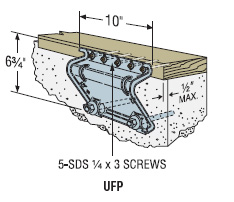
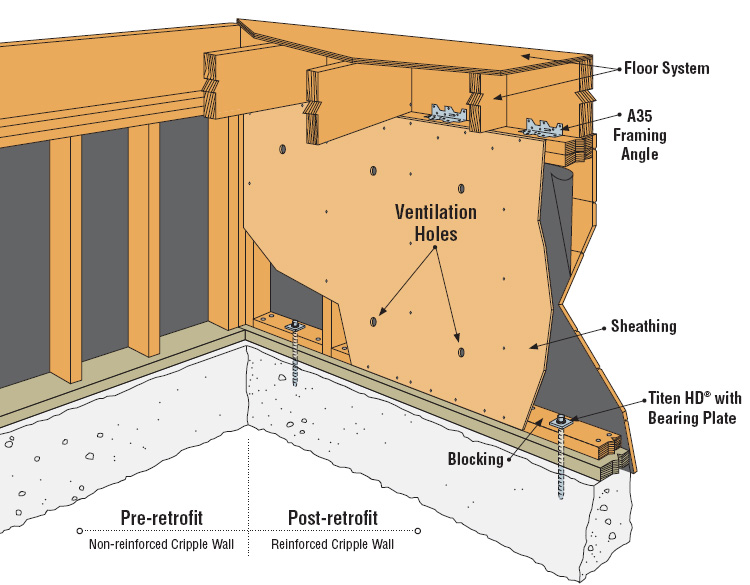
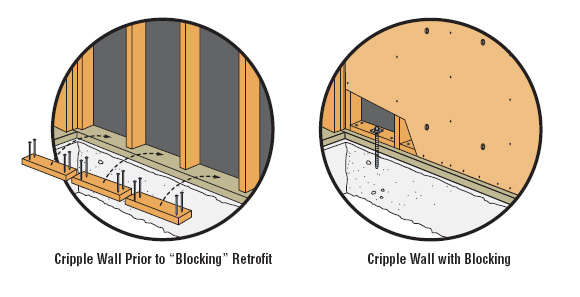
5. Crawl space walls must be reinforced with proper “sheer wall” plywood or OSB that is rated for this use.
Exterior perimeter walls should be reinforced with rated sheathing to add structural strenght to the walls. Lack of shear strength can cause wall failure, and building collapse.
Golden Gate Enterprises, Inc. specializes in structural and earthquake retrofit improvements and repairs. We can provide the necessary plans, engineering, and permits. Please call us today for an estimate at 510-885-0197. If you prefer, please send us an email and we will contact you.